

Company Politics
Boards should avoid overt political affiliations – normally.

In the run up to the last British general election, in July 2024, it was very obvious that the Labour Party were going to win a substantial majority. During that pre-election phase the shadow chancellor Rachel Reeves undertook an energetic round of breakfast meetings to make friends with business leaders. It was jokingly called the smoked salmon and scrambled eggs offensive. One benefit of these efforts was that more than 100 business leaders were persuaded to sign a letter of support saying, amongst other things: “Labour has shown it has changed and wants to work with business to achieve the UK’s full economic potential. We should now give it the chance to change the country”
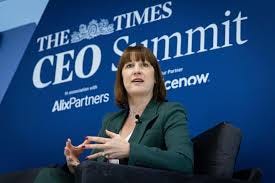
After the election victory the Labour Party embarked upon a series of legislative measures including an aggressive tax raising budget and some very pro trade union plans which has led many commentators come to the view that the Reeves government is , in reality, a distinctly business unfriendly administration. I wonder how many of those 100 plus business leaders now regret their very public statement of support ?
It is highly desirable in any democratic country that people, as individuals, do take an interest in politics and that they form an allegiance with one party or another and actively use their votes in general elections. It is very healthy for democracy for individuals to express their political views, defend the policies of their political heroes and criticize the plans of those they feel are mistaken. In this context it is not unreasonable for business leaders, again as individuals, to express their own political views. But a line is crossed his when it appears that a company or organization nails its colors to a political mast. This has to be a bad idea as no company can be sure that all its stakeholders will vote the same way.
As I have explored in an earlier post a company is essentially a person in law. It is an organization which has come together to enable people to pool and manage resources. A commercial company will typically have shareholders but all organizations have a broader set of stakeholders. Unless the organization is itself a political party it is extremely unlikely that all of those stakeholders will coalesce around an agreed political position. Each person will have their own politics and may well be less than pleased of the company they own/work for/ sell to/buy from takes highly visible political positions or campaigns for a specific party.
It is perfectly reasonable for a company to be politically active and astute and to lobby a government in pursuit of policies which it regards as beneficial to its own stakeholders. Oil companies may look for a more relaxed regulatory environment when it comes to drilling new wells. Car companies might look for tax incentives to introduce electric vehicles. An animal charity will seek improved animal welfare. But seeking to pursue commercial or charitable objectives is a very different thing from actively supporting a specific political party or leader. The company’s various stakeholders - its customers, staff and suppliers will have their own political views and these are likely to range across all the various party options.
Individual executives particularly chief executives may be prepared to take the risk of overt political identification but they need to take great care that this is not interpreted as committing their entire organization. Simon Wolfson, the highly successful CEO of clothing retailer Next, sits as Conservative peer in the House of Lords and as an individual is clearly known to support Conservative policies. However Next as a company appears independent of any political affiliations.
The 2024 UK election was held against the backdrop of years of catastrophic mismanagement by the UK’s Conservative party. So it was no surprise that business leaders were disillusioned and were prepared to give Labour a chance today but perhaps the signatories will now regret such active support.
So as a general rule companies should stay out of politics. But what about Elon Musk ?
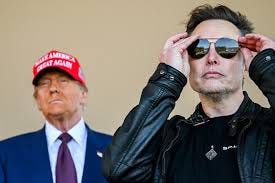
In the 2024 USA Presidential election Elon Musk gave active verbal and financial support to Donald Trump. He was all in. Wholly aligned. A true believer. And after Trump won the value of Musk’s holdings in Tesla and Space X went up by around 40% making him $70 billion richer. So his taking an overt political position looks to have been a win for him.
But will this mean that dyed-in-the-wool Democrats will no longer buy Tesla cars ? For the moment, at least, Wall Street investors seems to think : “No”. They assume Musk’s proximity to the President will help with regulatory approvals and other legal issues and that customers – even Democrats - will not mind.
As I write this Musk has stepped further into political territory. He is expressing strong support for the continued issuance of what are called H-1B visas - travel, residency and work permits given to individuals who are considered to have valuable commercial skills. Typically large numbers of H-1Bs go to technologists from India who go on to work in , and drive the success of, the type of Silicon Valley company that Musk, his shareholders , employees and customers have an active interest in .
This is where Musk looks to be a valid exception to the “no politics” rule. Companies which are highly innovative and operating at the edge of new technologies such as Tesla and SpaceX do have to become sophisticated political operators as government policy can have such a big impact on their operations. . They do need to engage with all levels of federal and local administration on both sides of the political spectrum. However being effective lobbyists often means keeping their own political views well concealed. Not in Musk’s case. He has gone several steps further by adopting a highly partisan affiliation as a way of achieving his commercial objectives. And it seems to be working for him.
But before other CEOs get any ideas it must be accepted that, by any definition, Musk is a special case. Sui generis. In many ways Musk and Tesla (and Space X) are indistinguishable entities. Musk is a founder and owner and visionary. He is not your typical CEO. If the politics were to blow up in his face it seems unlikely that his various boards of directors would be planning to fire him and even if they did his extraordinary level of wealth means it is a risk he would certainly be prepared to take. The average CEO is unlikely to want to take similar chances.
As a general rule corporations remain much better advised to watch the game from the sidelines rather than trying to become active participants. Enthusiastic political support can back to haunt you. (unless you are Elon Musk)